

September 1, 2026



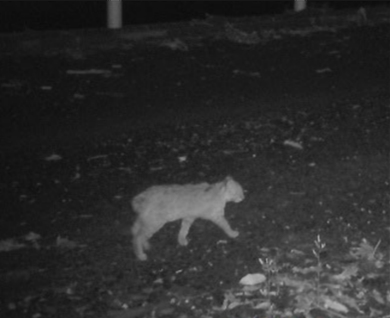
Anicom Specialty Medical Institute Inc. (Representative Director and President: Ryo Horie; hereinafter, “the Company”) conducted whole-genome analysis[2] of a short-tailed Tsushima leopard cat[1] identified on Tsushima, in a collaborative study with the Ministry of the Environment’s Tsushima Wildlife Conservation Center; Kyoto University’s Wildlife Research Center (Director: Satoshi Hirata); Kyoto City Zoo (Director: Seitaro Wada); the nonprofit organization Conservation & Animal Welfare Trust (Chairperson: Yushi Koshida); and Azabu University (President: Masaru Murakami). The results of nuclear genome analysis found no evidence of recent domestic cat introgression in this individual, and its mitochondrial DNA[3] was of the same type as that of other Tsushima leopard cats. Analyses of 15 other Tsushima leopard cats included for comparison also yielded no results supporting recent domestic cat introgression. To the best of our knowledge, this is the first report of a short-tailed individual in the felid genus Prionailurus.
These findings show that it is difficult to determine whether introgression has occurred from external features alone, and that genomic data are useful for assessing this. A paper describing the findings was published in Global Ecology and Conservation, an international journal of conservation biology published by Elsevier, and made available online on August 5, 2026.
The Tsushima leopard cat is a wild felid found only on Tsushima Island, Nagasaki Prefecture. It is listed as Critically Endangered (CR) on the Ministry of the Environment’s Red List and is designated a National Endangered Species of Wild Fauna and Flora under Japan’s Act on Conservation of Endangered Species of Wild Fauna and Flora. The Ministry’s latest population survey estimated that approximately 90 or 100 individuals inhabit Kamijima Island, depending on the estimation method used. At least 17 individuals have been confirmed on Shimojima Island.
Domestic cats also inhabit Tsushima. In addition to the transmission of infectious diseases, the loss of genetic distinctiveness through introgression[4] has been a conservation concern. Leopard cats and domestic cats are known to be capable of interbreeding, as demonstrated by the domestic cat breed Bengal, which originated through hybridization between the two.
Surveys conducted by the Ministry of the Environment and other organizations in 2024–2025 identified at least three Tsushima leopard cats with tail abnormalities at multiple locations on the island. To investigate, the Ministry captured one of these individuals and conducted examinations including radiography. Its tail measured 104 mm, approximately half the typical length for adult males (245.0 ± 20.14 mm), and the caudal vertebrae beyond approximately the ninth to tenth vertebrae were not clearly visible on the radiographs. The individual was released back into the wild after examination.
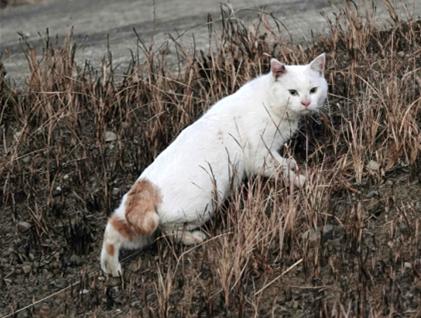
Tail abnormalities, including short tails, are common traits in domestic cats, and variants in several genes, including TBXT and HES7,[5] are known causes. This raised concerns that the short tail in this individual might also be attributable to domestic cat introgression. However, an abnormal appearance alone cannot distinguish introgression from variation within the wild population, developmental abnormalities, or injury. Because this distinction directly affects population management decisions, an objective assessment based on genomic data was needed.
Whole-genome analysis was conducted on 25 individuals in total: the short-tailed individual, 15 other Tsushima leopard cats for comparison, 5 domestic cats living on Tsushima, and 4 Amur leopard cats from the continent. The analysis compared 3.8 million single nucleotide polymorphisms (SNPs).
Principal component analysis,[6] which examines genetic similarity, placed the short-tailed individual within the Tsushima leopard cat population, with no intermediate position between Tsushima leopard cats and domestic cats. ADMIXTURE analysis,[6] which examines the genetic contribution of ancestral populations, and other analytical methods used to detect introgression likewise yielded no results supporting recent introgression. The individual’s mitochondrial DNA, which is inherited only from the mother, was also of the same type as that of other Tsushima leopard cats. The same pattern was consistently observed in the 15 other Tsushima leopard cats captured in the surrounding area.
The inbreeding coefficient[8] calculated from homozygous regions[7] of the genome averaged 0.585 in Tsushima leopard cats, markedly higher than in domestic cats (mean 0.126) and Amur leopard cats (mean 0.172). However, the short-tailed individual’s coefficient was 0.587, comparable to those of other Tsushima leopard cats. Thus, the short-tailed individual did not have a particularly high level of inbreeding relative to the others, and the results did not explain its short tail solely in terms of unusually high inbreeding specific to that individual. No variants predicted to affect gene function were detected in TBXT or HES7, which are known to be associated with short or kinked tails in domestic cats. This indicated that the causal variants reported in domestic cats could not explain this individual’s phenotype.
This study provides an example of an objective, genome-wide assessment of an individual of an endangered species in which introgression was suspected because of an unusual appearance. Suspected introgression can lead to decisions with irreversible consequences, including whether an individual can be released into the wild, whether it should be included in captive breeding programs, and how its population should be managed. These findings clearly demonstrate the dangers of relying on morphology alone when making conservation decisions.
By including other Tsushima leopard cats in the analysis, the researchers could investigate possible domestic cat introgression through comparisons among multiple animals, rather than relying solely on data from the short-tailed individual.
This is also the first report describing a short-tailed individual in the genus Prionailurus. In the Florida panther,[9] tail abnormalities have been treated as indicators of inbreeding depression, and their frequency is known to have declined following genetic rescue involving the introduction of individuals from other populations. The present study also highlights the importance of recording and closely monitoring morphological abnormalities in small, isolated populations.
No evidence of recent domestic cat introgression was found in the short-tailed individual or the 15 other Tsushima leopard cats analyzed for comparison. However, the cause of the short tail remains unknown. Because individuals with tail abnormalities have been observed at multiple locations, congenital or developmental factors are possible causes. Camera-trap images alone, however, cannot provide a precise assessment of the extent or cause of the tail abnormalities, and injury cannot be ruled out.
The methods used in this study are suitable for detecting recent introgression, but detecting older introgression or very low levels of genetic contribution remains technically difficult at present.
Further research would involve capturing individuals with tail abnormalities for clinical examination and genetic analysis. It would also involve developing noninvasive genetic monitoring methods using DNA from feces and other sources. Together, these approaches could help researchers monitor the population’s genetic health more consistently over time.
These findings do not rule out the risks of hybridization or contact with domestic cats on Tsushima Island. Infectious disease transmission through such contact remains a conservation concern. For example, wild Tsushima leopard cats have previously been found to be infected with feline immunodeficiency virus (FIV) thought to have originated in domestic cats.
Tsushima City’s Ordinance on Responsible Cat Ownership stipulates that owners should make efforts to keep their cats indoors and that people must not indiscriminately provide food or water to cats that are not in their care. Such responsible pet ownership remains important for protecting wildlife on Tsushima, including the Tsushima leopard cat.
By applying genomic analysis and other technologies in our research, we will continue to contribute to advances in veterinary medicine, improvements in animal welfare, and the conservation of rare wildlife and ecosystems.
This study was supported by Japan Society for the Promotion of Science Grants-in-Aid for Scientific Research (22K14910 and 24K17913), the Environment Research and Technology Development Fund of the Environmental Restoration and Conservation Agency (JPMEERF20244RB1 and JPMEERF20214001), and commissioned research funding from the Ministry of the Environment’s Kyushu Regional Environment Office.